Showing posts with label railway. Show all posts

Jul 27, 2009

Canterbury's First Fire Station


LARGE IMAGE OPENS IN A NEW TAB OR WINDOW

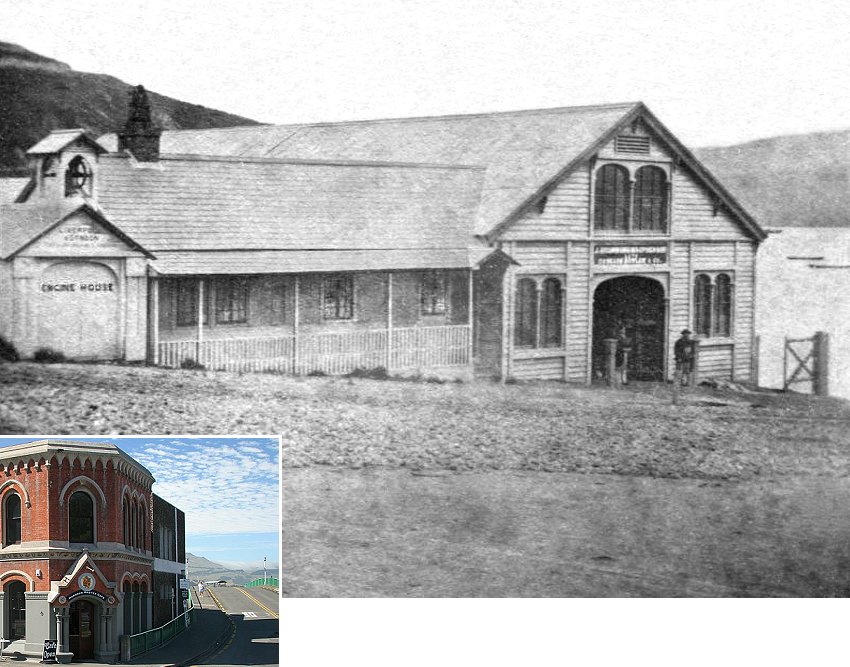
Photographed in August, 1862, this is a view of the three buildings occupying Lyttelton Town Section 33 to the eastern side of the access to the Canterbury Association's 1850 jetty. In 2009 it is the south-eastern corner of Norwich Quay, where the over-pass to the wharves begins just below the intersection with Oxford Street.


A similar view 147 years later

To the Right in the top photograph, at the south-eastern corner of the intersection is the Lyttelton Fire Station. Built in 1858, it preceeded the formal establishment of the Lyttelton Fire Brigade by four years.

Above the engine shed's front doors is the sign of the Liverpool, London and Globe Fire Insurance Company. That company shipped the engine, and the bell in the belfry above, from England to their Lyttelton agents.

Under the supervision of Thomas James Curtis, the Fire Brigade's Superintendent from 1862, the engine's steam powered pump could lift water, via a hose from the beach, three blocks north to Exeter Street.


From the rear in 1865

Next door, to the centre of the top photograph, is the 1852 premises of Bowler and Company. William Bowler (1803-1863), who lived in Sumer Road (just visible at the top Left of the top photograph), was a General Merchant and Shipping Agent. Bowler sent the first direct shipment of wool from Canterbury to London in 1856 and was subsequently owner of the paddle tug Lyttelton, which began service in the port from January, 1861.


Sketch detail: 1869 Royal Visit

Although the company's sign continues to indicate Bowler and Co., Isaac Thomas Cookson (1817-1881), agent for the Liverpool and London Fire Insurance Company had already entered into partnershp with Bowler, with the company's name becoming known as Cookson, Bowler and Company

The Fire Station and adjacent premises of Bowler and Company were demolished by 1880 to make way for the Lyttelton Harbour Board's extant former offices, currently occupied by The Harbourmaster's Café.

To the Right in the top photograph is the store of James Drummond Macpherson (1829-1894), built in 1859 on piers above the original beach. A Customs Agent, Lloyd's Agent, Ship owner, General Merchant, Coalmonger and Farmer, Macpherson was the first representative of Mathieson's Agency, a London company which shipped merchandise to the colony on consignment.


circa 1863

From 1864, using spoil from the railway tunnel construction, reclamation of the foreshore began. Five years later, with nearby soil quarried by prison labour, the beach in front of Scotsman's store disappeared beneath the site of the Port's first Railway Station.


circa 1908

The 1859 store became the Railway's offices and parcel shed, a role that it would continue to fulfil until 1963.


Overpass construction 1962

Knowing the price of everything, but nothing of heritage value, between 1965 and 1970 the Lyttelton Harbour Board set about the needless destruction of most of the historic buildings along the town's waterfront. James Macpherson's 1859 store was among the first to go. Its site remained vacant for 40 years, eventually succumbing to a nondescript concrete box in the neo-brutalist tradition.

The only surviving relic of Macpherson's ownership is the 1855 steam tug Mullogh, whose rusting bones now rest on Lyttelton Harbour's Quail Island.

May 23, 2009

1929 Electric Railcar Service to Lyttelton


A 1929 English Electric Company's locomotive arriving at Lyttelton.

The service was inaugurated at 3 pm on Thursday, the 14th of February, 1929. Early Canterbury settlers and guests of the New Zealand Government Railways Department were issued with free passes on that day.

Twenty return services were provided each day, with the journey taking about seventeen minutes. Commenced in 1867, passenger services between Christchurch and Lyttelton ended in 1976.


Addendum (further to a reader's comment)

The southeast corner of Manchester & Tuam Streets


By 1872 the corner was occupied by the Timber & Coal merchant Robert England (1839-1919), father of the England brothers of architectural fame. By 1900 (above) the business was owned by Wood and Laurie


First established at Lyttelton in 1851, the premises of J. M. Heywood & Company Ltd were built on the corner between 1908 and 1910 (centre, middle distance). The Customs, Insurance, and General Commission Agent's building was demolished about 1986.


Situated immediately to the East of the Heywood building, at 224-226 Tuam Street, was the premises of the general merchants E. W. Pidgeon & Company. Its last incarnation was as Federal Motors, service and parts agents for Renault, Peugot and Daihatsu cars. The building was demolished about 1997.


1950 aerial photograph of the Heywood and Pidgeon buildings.


1984 aerial photograph of the Heywood and Pidgeon buildings.

May 16, 2009

Curators Choice: Christchurch 1938 Lithograph


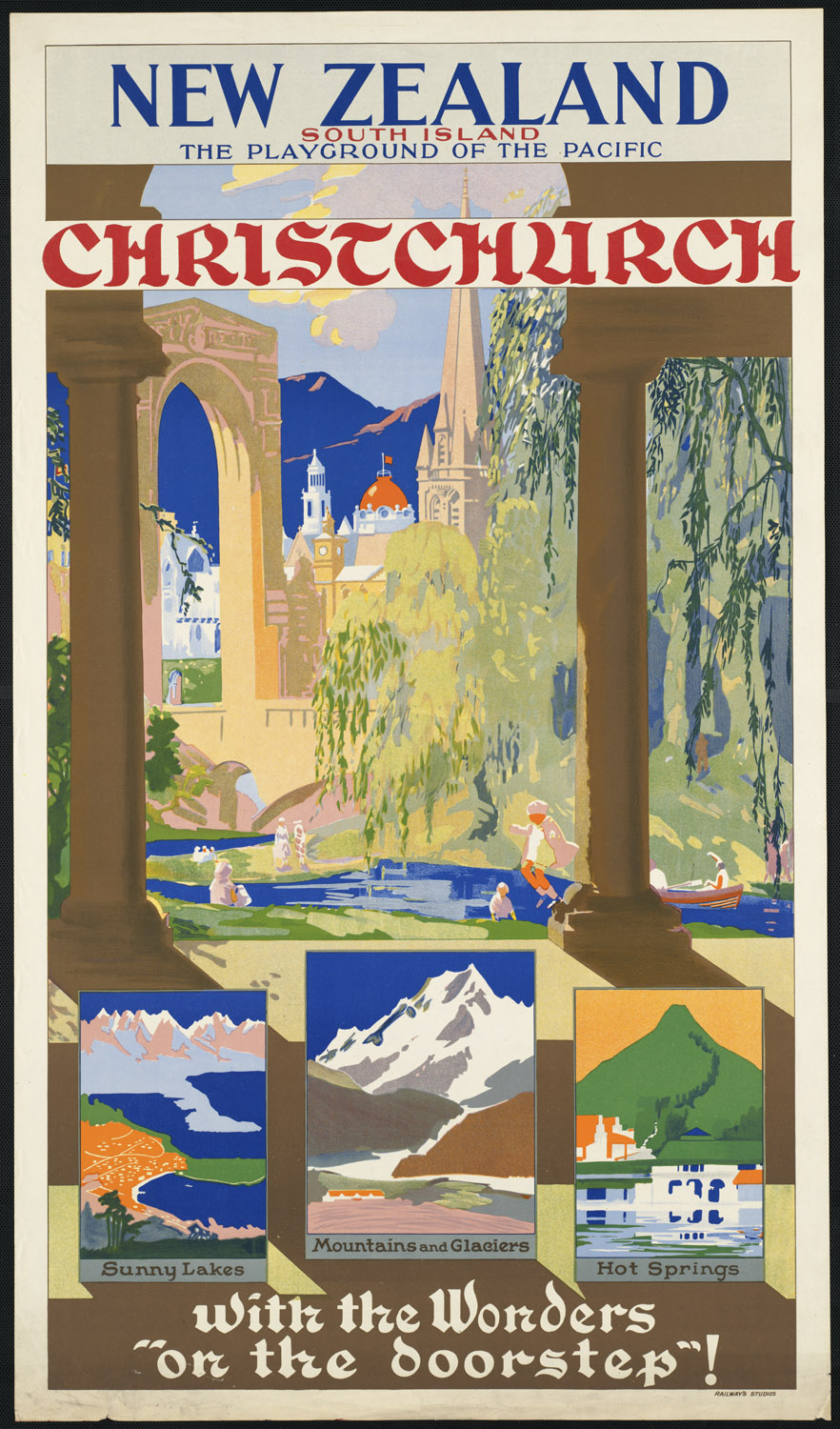
Detail from a circa 1938 lithographic poster of Christchurch for the New Zealand Department of Railways. Although unsigned, the painting can be attributed with reasonable certainty to the Wellington artist Leonard Cornwall Mitchell (1901-1971).

Depicted to the immediate Right of the Bridge of Remembrance is the lost tower of the 1918 Crystal Palace theatre, sadly demolished in 1986 in favour of the nondescript Crystal Plaza arcade.


An 882 x 1500 pixel image opens in a new tab or window

May 3, 2009

Christwegian Courtesans & Other Less Interesting Developments.

Subsequent to the opening of the second Railway Station on Moorhouse Avenue in 1867, Manchester Street South became the principal tram route between the inner city and the station. As a consequence, that part of Manchester Street from High Street to Moorhouse Avenue became lined with hotels, restaurants and various places of entertainment, etc.

Not surprisingly, in a tradition spanning at least 130 years, the street has been the favoured haunt of those practitioners of what is reputed to be among the world's older professions. Although probably unaware of their long precedent, Christwegian courtesans are still to be found plying their precarious trade along the more northern part of Manchester Street during the hours of darkness.


Marrying a rich widow, the dandified John Etherden Coker built his third hotel on her land. Opened in 1880, it would be far from the largest, but quite the most luxurious of the Manchester Street hotels. Pictured above is the hotel's dining room. With its marble statuary and starched table linen this room offered elaborate farinaceous repast to such notables as Rudyard Kipling and the Antarctic explorer Robert Falcon Scott. Two years after Coker's demise the hotel's public bar was reported to be the haunt of prostitutes and their consorts.


Alas all hotels have their heyday and long gone are the Terminus, Silver Grill, A1 Temperance, Railway, Manchester and Leviathan, but in much reduced circumstances, Coker's Hotel lingers on as a Backpacker's hostel. A significant part of its formerly elegant facade is now artistically rendered to represent a semi-derelict wooden shanty and the sadly dilapidated dining room (above) continues to serve a similar, but more modest purpose.


In 1938 William Gray Young (1885-1962) submitted a Bauhaus inspired design for a new Railway Station. To be the city's largest building, construction was delayed until 1953 and the somewhat modified design was finally completed in 1960. The Railway Station survived as such for only 31 years to be sold off for redevelopment as an entertainment centre.


Much touted as Christchurch's tallest building, the 86 metre, 23 level C1 apartment building in Gloucester Street East has been plagued with problems. Although all but four of the apartments have been pre-sold, the above photographs indicate the minimal extent of construction development between May 2008 and May 2009.

Oct 30, 2008

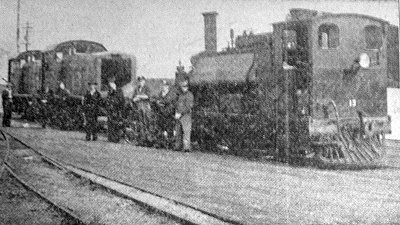
Lyttelton Locomotives 1953


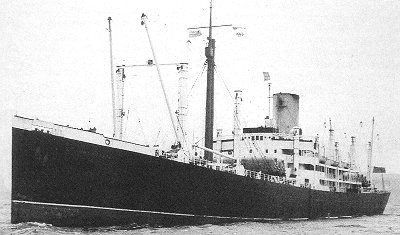
The 1872 steam locomotive F13 towing a pair of new 200 horsepower diesel locomotives unloaded from the deck of the New Zealand Shipping Company's 12,000 ton refrigerated cargo vessel Hororata (1942-67).


Hororata with locomotives as deck cargo

Originally Otago Railways' No. 8 Edie Ochiltree, F13 was renumbered in 1885. Based at Christchurch for many years, the locomotive was named Peveril in 1958. Withdrawn from service in 1964 and stored at Arthurs Pass, it was donated by New Zealand Railways to the Ferrymead Heritage Park in 1967. 

Jun 8, 2008

Old Railway Station Revitalisation?


8 June, 2008.

Science Alive is the science learning centre based in the 1957 Railway Station building on Moorhouse Avenue.

The centre has outgrown the building and is seeking new and innovative premises on a large block of land in the city. If they can't find a suitable city site then they intend moving the centre to a suburb.

The directors of Science Alive have been overseas looking at similar developments, and are apparently planning something special to expand the promotion of Science as a vital part of life. They propose to be developing the project within a year or so.

Could the Railway Station be heading for a new lease of life as a rail hub for the city, surrounded by dense apartment living, entertainment and commercial activity? Could this be the big one in the redevelopment of the south of the city centre?

The $240 million reported in The Press newspaper is probably only going to get a line up and running, which might have eight to twelve stations. The cost of having a good system would be at least four times that. There still hasn't been much mention of light rail, which would probably cost a further few hundred million to set up.

The old station had one main platform running through from east to west and had dock platforms at either end for use by suburban trains and other services. The railway line now runs along a corridor as two tracks 30-50 metres to the south of the old station and is now hemmed in by ugly developments on either side.

Word on the street indicates that there's a lot going on behind the scenes, with most enthusiasm coming from the Christchurch City Council and the Selwyn and Waimakariri District Councils, but with scepticism mixed with intrigue coming from Environment Canterbury. The opinion of the group of councils probably counts most.

We shall just have to wait and see...

1913 Postcard


Update: 19 June 2008

Science Alive is looking to establish a state-of-the-art science centre with the University of Canterbury as a partner.

Science Alive chief executive Neville Petrie and the university's pro-vice- chancellor of science, Professor Ian Shaw, have confirmed plans to build a new centre on the university's campus.

May 7, 2008

Christchurch Mayor Proposes Suburban Rail Reinstatement

Bob Parker has seized on the Government's agreement to repurchase the rail network as a chance to kick start passenger rail services connecting the city centre to Lyttelton, Rangiora and Rolleston on existing tracks.

If the proposed extension to the inner city vintage tram line could be integrated with a reinstatement of the 1867-1970 passenger service to Lyttelton and thereby to the proposed $30 million cruise ship terminal, then significant benefit would undoubtedly accrue to the city.

Sixty-four thousand cruise ship passengers visited the port in 2008, with that number forecast to grow to one hundred and ten thousand in the following year.

A vintage passenger train and/or tram link between the cruise ship terminal and the city's cultural precinct could be a major tourist attraction.

Related Links

Commuter rail network mayor's goal - The Press, 7 May 2008

New cruise-ship berth for Port of Lyttelton - The Press, 29 March 2008

Feb 19, 2008

What Price Ashburton History?

That’s the question Ashburton ratepayers have to ask themselves as a row brews on the future of the historic railway station. The station has a Historic Places Trust II rating and protection under the local district plan, but is on the demolition list by owner Peter Hanson. The Ashburton District Council is making a last-ditch effort to save this slice of Ashburton’s history. More ...

The Ashburton Guardian, Tuesday, 19 February 2008