Oct 31, 2008

Waimate: Quinn's Arcade Restoration


LARGE IMAGE OPENS IN A NEW WINDOW

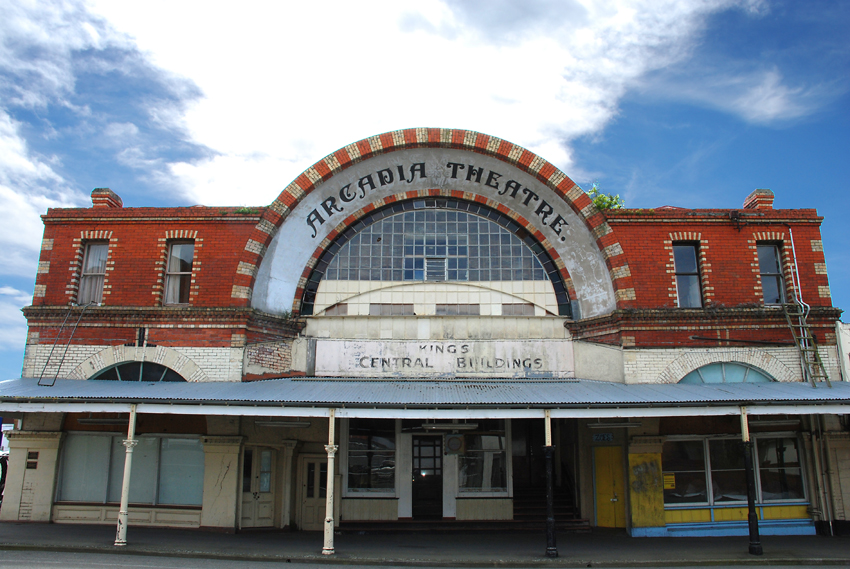
What is believed to be New Zealand's first indoor shopping mall is now entering another stage in a plan by a Waimate group to return it to its former glory.

• Built between 1905 and 1907.

• Original owner William Quinn, Makikihi landowner and businessman, born 1828 in Northern Ireland, died July 1, 1914, at Makikihi.

• Building has 296,970 bricks from Quinn's own brickworks.

• Converted to Arcadia Theatre between 1918 to 1920.

• Fire destroyed the theatre on June 29, 1955.

• First floor converted to flats in 1964-65.

• Rest of building used for various purposes, including storage.

• Purchased 2008 by Pro-Ject Waimate.

• October, 2008, conservation and concept plan prepared.

Further Reading: Otago Daily Times - Friday, 31 October 2008.

Photo by Geof Wilson

The European Arrival

LARGE IMAGE OPENS IN A NEW WINDOW

Natives and Captain Cook by Angus McBride, British Artist and Illustrator (1931-2007).

Angus McBride obituaries 
The Times (9 June).

This image forms part of the monthly 'Curators Choice' series from Canterbury Heritage.

Oct 30, 2008

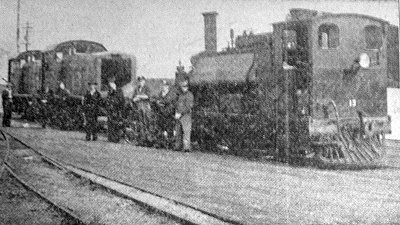
Lyttelton Locomotives 1953


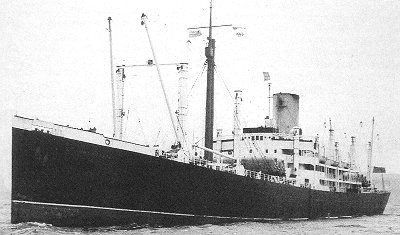
The 1872 steam locomotive F13 towing a pair of new 200 horsepower diesel locomotives unloaded from the deck of the New Zealand Shipping Company's 12,000 ton refrigerated cargo vessel Hororata (1942-67).


Hororata with locomotives as deck cargo

Originally Otago Railways' No. 8 Edie Ochiltree, F13 was renumbered in 1885. Based at Christchurch for many years, the locomotive was named Peveril in 1958. Withdrawn from service in 1964 and stored at Arthurs Pass, it was donated by New Zealand Railways to the Ferrymead Heritage Park in 1967. 

Oct 25, 2008

Lyttelton Royal Visit 1957


LARGE IMAGE OPENS IN A NEW WINDOW

From Melbourne, with the Duke of Edinburgh aboard, Her Majesty's Yacht Britannia berthed at Lyttelton's Oil Wharf on Saturday the 15th of December, 1957.

At 7.00 a.m. on the following morning Britannia shifted berth across to the north side of the harbour where the New Zealand frigate escorts Hawea and Pukaki were already lying.


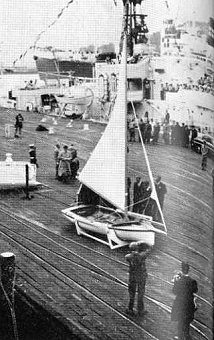
Above: Prince Phillip went ashore at 10 a.m. and was presented with a yacht by the New Zealand Manufacturers' Federation. This boat, called White Heron, was made of fibre glass, and was subsequently embarked on the boat deck for carriage home. After inspecting the Antarctic supply ship HMNZS Endeavour (below) and her crew, the Duke of Edinburgh left by car for Christchurch to carry out the remainder of the day's programme.


LARGE IMAGE OPENS IN A NEW WINDOW

Britannia departed for the Chatham Islands at 11 p.m. on Monday the 17th December. The Endeavour, which later followed Britannia out had the misfortune to be caught in a heavy gust in the harbour. The reconnaissance aircraft, which was secured to her aft deck, was damaged, but the vessel herself escaped damage.

HMNZS Endeavour had been commissioned into the Royal New Zealand Navy on the 15th August, 1956. The wooden hulled Antarctic supply vessel was built in the United States in 1944 as the net layer USS Satinwood and served in the British Home Fleet as HMS Pretext from 1944. 

In 1947 she was bought by the Falkland Islands Government and renamed John Biscoe. She was subsequently refitted for polar conditions and for three years serviced stations and parties of the Falkland Island Dependencies.

In June 1962 she was sold again, renamed the Arctic Endeavour and fitted out for sealing work in the Arctic. The vessel foundered off Newfoundland on the 11th of November, 1982.


Acknowledgement: the enlargable images are from the Canterbury Public Libraries' flickr web site.

1871 Lyttelton Lodge


LARGE IMAGE OPENS IN A NEW WINDOW

A former Freemason's Lodge on the East side of Canterbury Street, between London and Winchester Streets. The symbolism of a Blue Lodge is significant to the Masonic Brethren. Consecrated on the 28th of March 1871, the Canterbury Kilwinning No.23 Lodge building is now a private residence and is understood to be the studio of an artist.

Oct 21, 2008

Lyttelton Masonic Lodge 1876


LARGE IMAGE OPENS IN A NEW WINDOW

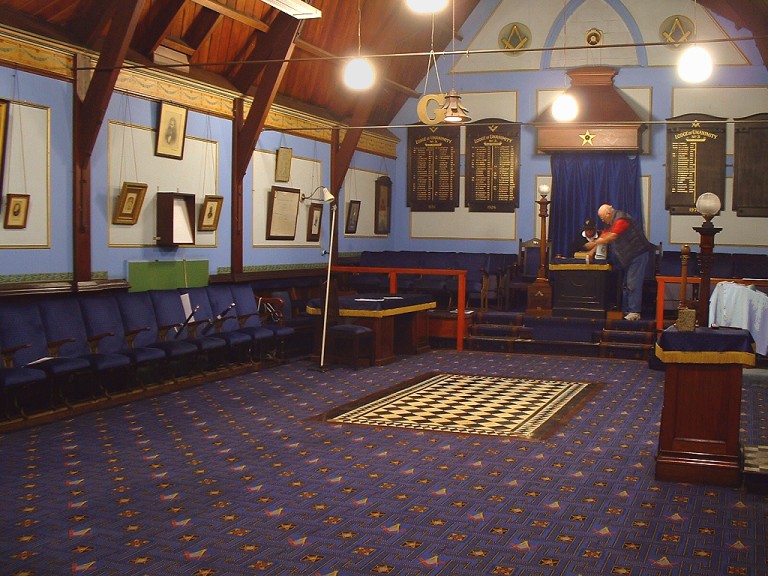
Designed by the Gothic revivalist Architect Benjamin Woolfield Mountfort (1825-1898), this is the remarkably original 1876 Hall of Lyttelton's second Masonic Lodge.

Left centre: Secretary & Treasurer's chairs, Right: Junior Warden's chair.

Dias Left: past Masters and Grand Lodge officers seating, Right: visiting Masters seating.

The other seating is from Lyttelton's 1917 Harbour Light Cinema.

Oct 17, 2008

Last Photo of the Wahine


LARGE IMAGE OPENS IN A NEW WINDOW

This is quite possibly the last photograph of the inter-island ferry Wahine at Lyttelton on the 9th of April, 1968.

Andrew Clark writes "Taken by my Dad at the ferry terminal while waiting to go to Wellington for their honeymoon. Mum freaked out at the approaching storm clouds and convinced Dad to re-book for the next sailing..."

Photograph by Andrew Clark of Dunedin.

Oct 15, 2008

Cathedral Square 1979


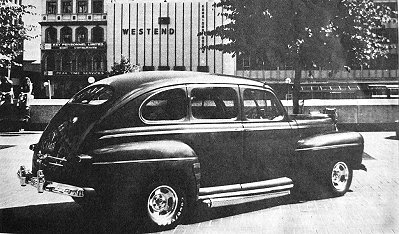
Geoff Duff's 1947 Ford V8 Sedan pictured in front of Kerridge Odeon's Westend Cinema (1915-2007) and the 1914 Sevicke Jones building at the corner of Chancery Lane.

Photographed in the Summer of early 1979, it's to be regretted that this isn't a colour photo as the classic Street Rod was finished in Maroon, with a Gold tint added for a candy-style gloss over highlights.

Christchurch Modernist Architecture


Matt Arnold's Website development team at Sons & Co. are the latest occupants of Diederik van Heyningen's 1965 Photographic Studio at 207 Cambridge Terrace (between Colombo and Manchester Streets). Their commercial premises are a classic example of post-war modernist architecture and it therefore comes as no particular surprise to learn that they've published an interesting web site devoted to our domestic architecture of the Modernist period.

The site covers architectural design from the 1940s to the 1980s and includes biographical articles of such renowned local Architects as Paul Pascoe, Peter Beaven, Miles Warren and Maurice Mahoney.

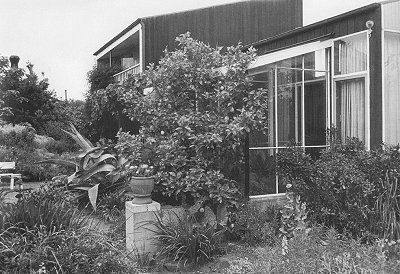
Above is a photograph of the 1961 home of the renowned Christchurch artist W. A. (Bill) Sutton (1917-2000). Yet to be included in the web site's comprehensive listing of outstanding examples of the period, the Sutton house at 20 Templar Street, Richmond could be a worthy addition.

The Christchurch Modern web site opens in a new window

An RSS feed is also available for site updates.


Comment by Matt.  January 9, 2009.

The building was originally designed for Mannering & Associates by Warren and Mahoney as a purpose-built photographic studio in 1965. Warren and Mahoney celebrated the opening of the Town Hall there in 1972 as the studio looks right across Colombo St. It's not in great condition and the original white has been painted over, but a great building nonetheless and under the threat of development.

Comment by Canterbury Heritage.  January 10, 2009.

By 1951 the 29 year-old photographer Guy Miles Mannering and his partner Keith Donaldson had purchased the Clifford Studios at 115 Cashel Street. Henry Herbert Clifford (1872-1949) had first opened his studio in 1903, but is probably more remembered as being the husband of the notorious "Ma" Clifford, an immensley wealthy racketeer Landlord.

Renamed as the Mannering & Donaldson Studios they specialised in Studio, Commercial, Industrial & Candid photography at the Cashel Street premises, which was situated above the bookshop of Whitcombe and Tombs (now the Whitcoulls Building) until 1965.

Mannering and Associates Ltd had moved from 207 Cambridge Terrace to 14 Stanley Street, Sydenham by 2001. The renowned Guy  Mannering died in 2003 at the age of eighty.

The original Cashel Street premises had also been occupied by the Photographic Engravers T. E. Warren and Company. Accordingly, there may have been a degree of kinship between Guy Miles Mannering and Sir (Frederick) Miles Warren, architect of the Cambridge Terrace Studio.


Oct 12, 2008

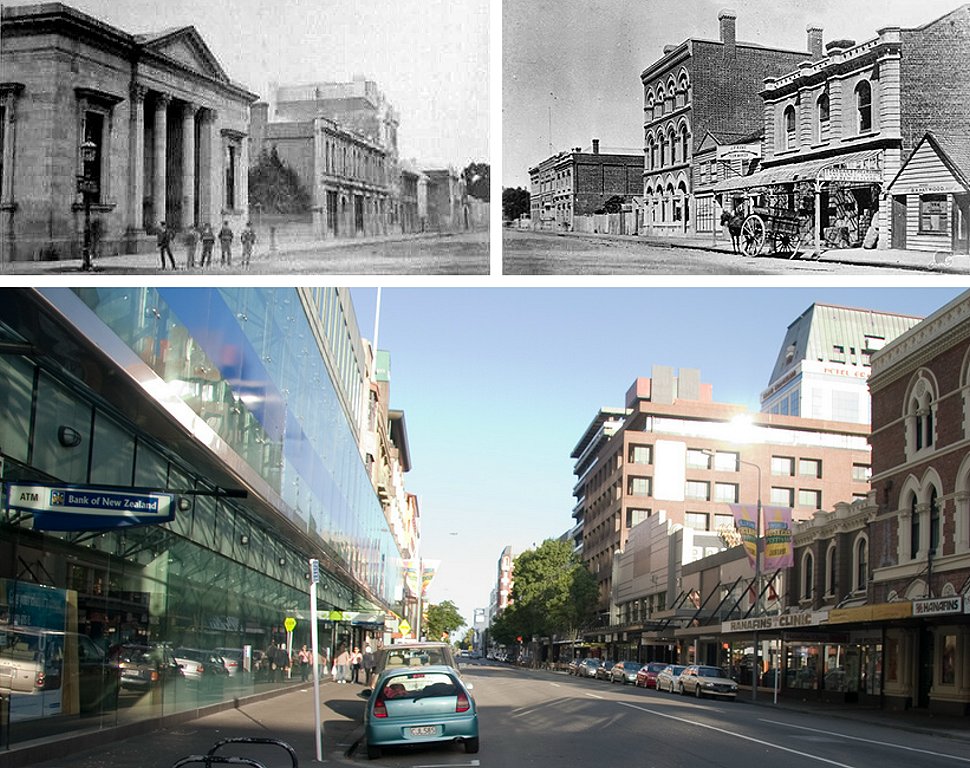
Christchurch 1878-2008


LARGE IMAGE OPENS IN A NEW WINDOW

An easterly view of Hereford Street from the intersection at Colombo and High Streets, looking towards Manchester Street.

The two storey building to the Right is the only survivor from the earlier photograph.