Showing posts with label 1940s. Show all posts

Jul 4, 2009

Same View Over 158 Years

Covering a period of 158 years, these are five southerly views of Colombo Street from the vicinity of Victoria Square.


1851


1868


1882


1949


2009

Feb 21, 2009

60th Anniversary: 21st of February, 1949


The Christchurch City Council informs its citizens that a grant of armorial bearings was made to the city by the Royal College of Heralds by letters patent on the 21st of February, 1949.

Being the sixtieth anniversary of that allegedly august event, we'd like to point out that Christchurch already had a coat of arms (below).


This prior armorial bearing included a depiction of the Lyttelton railway tunnel, which was replaced in the 1949 version by an abstract representation of the first four ships to bring emigrants from Gravesend to Lyttelton.

The first four ships mythological conceit emblazoned upon our more recent heraldic arms conveniently overlooks a number of awkward facts, not the least being that these newcomers were welcomed by the Canterbury Association's emigrants who had already arrived via Wellington.

Dec 13, 2008

Now and Then

The east side of Christchurch's Cranmer Square between Chester and Kilmore Streets in 1940, 1959 and 2007. The cottage to the Left in the earlier photographs dates from the early 1870s, but had been demolished by 1965.


In this drawing the early 1870s cottage is to the Right. At the far Left is the extant mid 1870s shop at the corner of Kilmore Street, which had become the Tuck Shop of the adjacent Normal School by the 1950s. Next to the shop is an extant mid 1850s cottage. The two storey house to the Right of the this cottage was the pre 1877 home of William Wilson, Headmaster of the Methodist Church School in Durham Street. 


In 1900 the Methodist church in St Asaph Street burned down, with the adjacent church hall suffering minor damage. In an area that was becoming increasingly industrial, it was decided not to rebuild the church. The hall was dismantled and rebuilt as a school behind Wilson's house, across the boundary to the gable roofed dwelling next door. This early 1860s house was also part of the school, which had five teachers and 75 pupils, including 12 boarders by 1904 (above). Demolished by 1975, the site of William Wilson's house has been a car park ever since.


1959 photo by wiselark of Wellington.

Dec 3, 2008

Street Photographers


With the introduction of the 35mm Leica portable camera in 1925, candid street photographers became a common sight in Christchurch's Cathedral Square until the early 1960s.

In this typical example of their work is a then unknown 20 year-old, photographed with his parents as they pass the Cathedral in a southerly direction.

More familiarly known as plain Bill, Sir Wallace Edward Rowling KCMG, (1927-1995) would become the Member of Parliament for Fendalton in 1960 and then Prime Minister of New Zealand in 1974.

Nov 27, 2008

Curator's Choice

This month's Curator's choices from the Canterbury Heritage collection are vintage luggage labels from Christchurch's most prominent hotels in the first half of last century.


Nov 15, 2008

Our history may be somewhat closer than many of the more recent generations are aware...

As a child the Ngati Toa tribal chieftain Te Rauparaha (~1760-1849) remembered the visits of James Cook to New Zealand between 1769 and 1777. He also knew Edward Jollie (1825-1894), whose 1861 wedding was attended by this contributing Editor's Great Grandmother. Accordingly, there are no more than three degrees of separation between Captain Cook and living New Zealanders.

In the case of Canterbury there are still a few locals who knew the last survivor of the original settlers of 1850. Among them is 93 year-old Austen Deans, last surviving Great Grandson of John Deans who settled at Riccarton in 1843.


Richards Evans aged in 16 in 1864

Richard Evans (1848-1944) arrived aboard the Cressy as a two year old. The second to last survivor of the first four ships and a Patron of the Canterbury Pilgrims Association, he is remembered by Roger Ridley-Smith, who is thereby a remarkable link to the very beginnings of Christchurch.

The Reverend Frederick Brittan (1848-1945), last survivor of our first settlers, delivered a eulogy at Richard Evans' funeral.


Tea drinking 90 year-old Richards Evans seated beside a young Roger Ridley-Smith

Roger Ridley-Smith writes:
My father, E D R Smith, (1901-1975), a lawyer in Rangiora, knew Richard Evans. In 1938, the three of us went to the Bridle Track where there was a ceremony at the memorial there. It may have been the unveiling of it. Evans, who would have been aged ninety, sat in the back of my father's Chevrolet. and I recall him as a small man with a snow white beard. I was aged seven. Memory is fallible, but that is as I recall it.


Dilapidated and forgotten, this is the grave of Georgina Sophia and Richard Evans in St John's cemetery at Rangiora.


Canterbury Heritage is gratefully indebted to Sarndra Lees for the 1864 photograph of her Great Great Uncle and his grave. Also to Dr. Ridley-Smith for the 1938 photograph of his father's 90 year old friend.

We would also be very pleased to hear from anyone who can expand upon this interesting aspect of our history.

Nov 10, 2008

The Port Lytteltons

Two passenger carrying refrigerated cargo vessels have carried the name of the Port to which they were both regular vsitors.


The first Port Lyttelton was built at Belfast in 1902 as the twin screw Niwaru. With a length of 135 metres and a beam of 17 metres, she was delivered to the Tyser Line in March of that year.

At a service speed of 12 knots, she regularly carried frozen meat from New Zealand to Britain, but her 22 year career was not uneventful. On her second voyage, the 6,444 ton cargo liner, took on water in a heavy sea and charcoal from the insulation of the refrigerating chambers clogged her bilge pumps. 26,000 carcases had to be jettisoned overboard.


In August of 1903 the Niwaru was holed when she grounded off Napier. A mat covering the hole was carried away and the net inflow increased to twelve inches per hour, but the vessel managed to return to Napier under her own steam.

But her place in history was assured when she departed from Wellington on the 29th January 1903 with Katherine Mansfield as a passenger. The entire passenger accommodation was occupied by nine members of the Beauchamp family. Niwaru sailed via Cape Horn and the Canary Islands, where a photograph was taken of the family with the ship’s officers.

In verses that she wrote during the voyage, Mansfield mentioned a Tiger cub, which the Chief Officer kept in the No. 2 hold during the day and exercised on deck at night, to the alarm of the women passengers. But of that incident apparently little memory remained nearly twenty years after, when she wrote to her father: “... I still I have a very soft corner in my heart for the Niwaru. Do you remember how Mother used to enjoy the triangular shaped pieces of toast for tea? Awfully good they were, too, on a cold afternoon in the vicinity of the Horn. How I should love to make a long sea voyage again one of these days! But I always connect such experiences with a vision of Mother in her little Sealskin jacket with the collar turned up. I can see her as I write.”

Most of the family returned to Wellington, but for the next three years Katherine remained in London as a pupil at the Queen’s College in Harley Street.

In 1914 Niwaru's owners were instrumental in bringing about the formation of the Commonwealth & Dominion Line, later to become the Port Line, contributing eight ships and their houseflag, which never changed. Although not a huge fleet, Tyser and Company's ships were considered to be the finest on the Australasian run and set the standard for the first thirteen ships built by the new Commonwealth & Dominion Line.


Renamed Port Lyttelton in April 1916, the vessel was subsequently seconded by the Royal Navy and converted to a troop ship as His Majesty's Auxillary Transport Port Lyttelton.


Returned to her owners in 1919, her career ended on the 23rd January 1924, when she ran on to the rocks at Beauty Point near the entrance to Tasmania's Tamar River. Salvaged the following month, the Port Lyttelton was sold for scrap at the time when there was a worldwide surplus of tonnage. She arrived in Italy in September where the ship was broken up.


By comparison the second Port Lyttelton enjoyed a somewhat less eventful 25 year career. Her greatest claim upon posterity appears to have been her role in New Zealand's waterfront strike of 1951. Local Wharfies (Stevedores) were charged with conspiracy relating to the loading of the vessel at Wellington in that year.


Launched at Newcastle in 1947 by R & W Hawthorn, Leslie & Company, the 10,780 ton ship was only slightly larger than her ill fated predecessor at a length 148.47 metres and a beam of 18.95 metres.


The emergence of container shipping sealed her fate and she was sold to Shipbreakers in 1972. The second Port Lyttelton was broken up the following year at Faslane in Scotland.

Oct 15, 2008

Christchurch Modernist Architecture


Matt Arnold's Website development team at Sons & Co. are the latest occupants of Diederik van Heyningen's 1965 Photographic Studio at 207 Cambridge Terrace (between Colombo and Manchester Streets). Their commercial premises are a classic example of post-war modernist architecture and it therefore comes as no particular surprise to learn that they've published an interesting web site devoted to our domestic architecture of the Modernist period.

The site covers architectural design from the 1940s to the 1980s and includes biographical articles of such renowned local Architects as Paul Pascoe, Peter Beaven, Miles Warren and Maurice Mahoney.

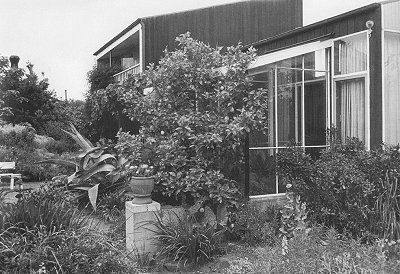
Above is a photograph of the 1961 home of the renowned Christchurch artist W. A. (Bill) Sutton (1917-2000). Yet to be included in the web site's comprehensive listing of outstanding examples of the period, the Sutton house at 20 Templar Street, Richmond could be a worthy addition.

The Christchurch Modern web site opens in a new window

An RSS feed is also available for site updates.


Comment by Matt.  January 9, 2009.

The building was originally designed for Mannering & Associates by Warren and Mahoney as a purpose-built photographic studio in 1965. Warren and Mahoney celebrated the opening of the Town Hall there in 1972 as the studio looks right across Colombo St. It's not in great condition and the original white has been painted over, but a great building nonetheless and under the threat of development.

Comment by Canterbury Heritage.  January 10, 2009.

By 1951 the 29 year-old photographer Guy Miles Mannering and his partner Keith Donaldson had purchased the Clifford Studios at 115 Cashel Street. Henry Herbert Clifford (1872-1949) had first opened his studio in 1903, but is probably more remembered as being the husband of the notorious "Ma" Clifford, an immensley wealthy racketeer Landlord.

Renamed as the Mannering & Donaldson Studios they specialised in Studio, Commercial, Industrial & Candid photography at the Cashel Street premises, which was situated above the bookshop of Whitcombe and Tombs (now the Whitcoulls Building) until 1965.

Mannering and Associates Ltd had moved from 207 Cambridge Terrace to 14 Stanley Street, Sydenham by 2001. The renowned Guy  Mannering died in 2003 at the age of eighty.

The original Cashel Street premises had also been occupied by the Photographic Engravers T. E. Warren and Company. Accordingly, there may have been a degree of kinship between Guy Miles Mannering and Sir (Frederick) Miles Warren, architect of the Cambridge Terrace Studio.


Sep 21, 2008

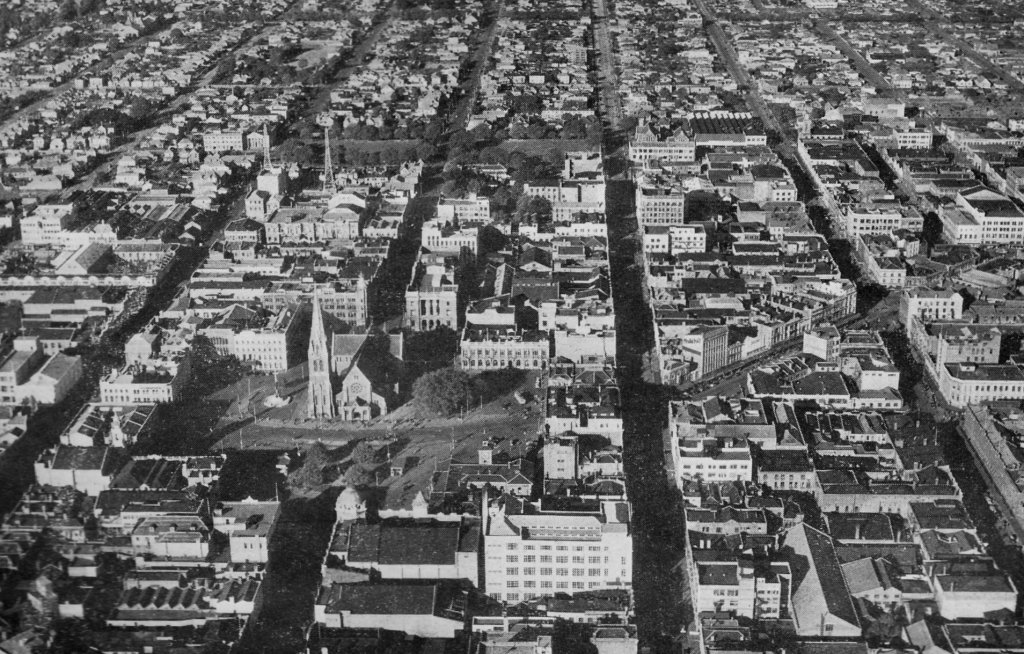
Christchurch 1947


LARGE IMAGE OPENS IN A NEW WINDOW

An easterly aerial view of the central city on a late afternoon in January or February 1947.


To promote the Christchurch City Libraries Retrospective: Christchurch life, architecture and design 1940s - 1970s photo competition, we're featuring a series of images from each decade. This week was the later 1940s and next week we'll take a look at the 1950s.

Sep 20, 2008

New Brighton 1945-1949


An easterly view of Seaview Road, with the intersection at Oram Avenue to the centre Right.


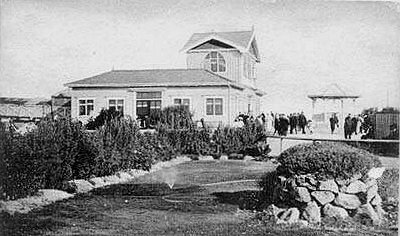
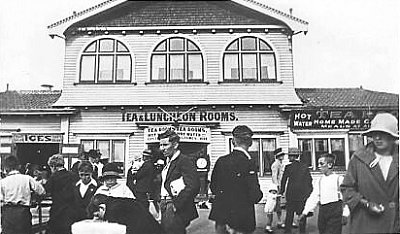
Two views of the building at the head of the first pier. The lower level was an amusement arcade, with tea rooms above. The 213 metre pier was opened on the 18th of January, 1894 by the Governor General.


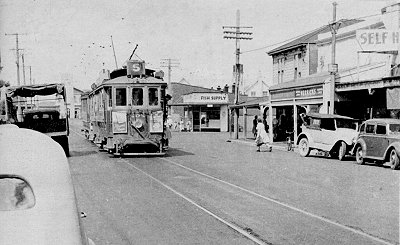
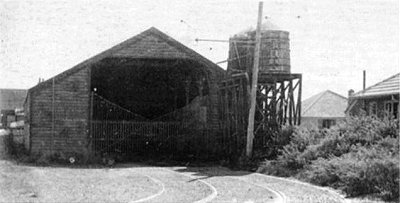
The Tram shed at the corner of Marine Parade and Hawke Street. The site is now occupied by the New Brighton Working Men's Club. The Tramshed Bistro is a feature of what is now more commonly known as The New Brighton Club.


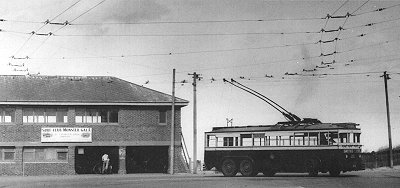
An electric Trolley Bus turning at the North New Brighton War Memorial and Community Centre on Marine Parade.


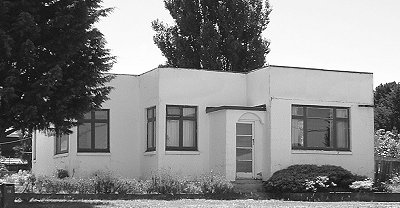
A recently completed house in Sinclair Street (which first appears in street directories in 1916).


To promote the Christchurch City Libraries Retrospective: Christchurch life, architecture and design 1940s - 1970s photo competition, we're featuring a series of images from each decade. This week it's the later 1940s.

Sep 19, 2008

The Other 1947 Christchurch Fire


1947 will hopefully remain the most tragic year in the history of Christchurch. Although not the largest conflagration, and barring the 1918 Influenza epidemic, the Ballantyne's fire claimed more lives than any other disaster to befall the city.

But there was another spectacular fire further down Colombo Street that year when the premises of the Electrical Engineers Arnold & Wright Ltd. were completely gutted. Fortunately the adjoining box factory of Whitcombe & Tombs escaped major damage.

Situated on the western side of Colombo Street South, between St Asaph and Bath Streets, the former site of both buildings has been occupied by the car park of the South City Shopping Centre since 1990.


To promote the Christchurch City Libraries Retrospective: Christchurch life, architecture and design 1940s - 1970s photo competition, we're featuring a series of images from each decade. This week it's the later 1940s.

Sep 18, 2008

1940s Wainoni

Generally regarded as little better than a desert, the area originally known as the Sand Hills district, between Christchurch and New Brighton, was flat land humped up into a series of low, shifting sand hills, barren except for a few hardy native plants.

In 1875 the Architect and Christchurch City Surveyor Cornelius Cuff (1837-1901) purchased all of the area that would become known as Wainoni. Cuff built a substantial two-storey house, with a large conservatory attached to its eastern side. Named Sandilands it was sold to Henry Slater a Lawyer of Lichfield Street. Last occupied by the widowed Ellen Susanna Slater in the 1950s, it became derelict and was demolished about 1963 to make way for Vancouver Crescent.

From the early 1880s Cuff subdivided much of his land into rural-recreational blocks of 20 to 30 acres. All of the six grand houses built between 1882 and 1907 survived into the 1950s, but only two have made it to the 21st century.

With the advent of sewerage connections from the later 1940s Wainoni quickly developed as a suburb of predominantly three-bedroom weather board houses on quarter acre sections.
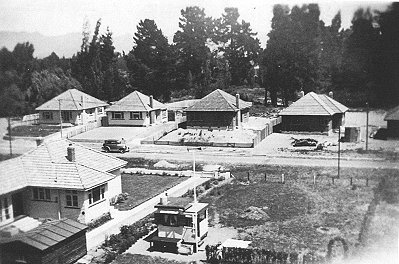

An elevated westerly view of Ottawa Road in 1946, with the extensive grounds of Cornelieus Cluff's 1870s house in the background. Originally a sandy track to Bickerton's Fireworks factory, it became known as Onslow Street in the late 1880s (after a Governor General), the name was changed to Ottawa Road in 1933 to mark the visit of a Canadian Prime Minister.
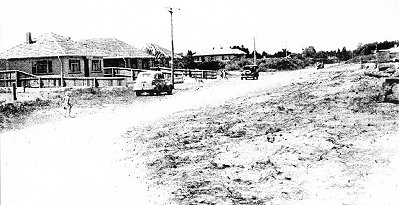

A 1948 south-easterly view towards Pages Road of Shortland Road (now Street) from the corner of Wainoni Road. Shortland Street was probably named after Dr Edward Shortland (1812–93), Physician, early South Island explorer, Māori scholar and linguist.


The Grand Houses of Wainoni
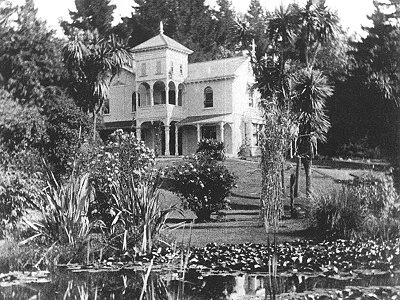

Littleover House was built in 1882. It was demolished in 1963 to be replaced by a Milk Transfer Station in what became Tahuna Street.
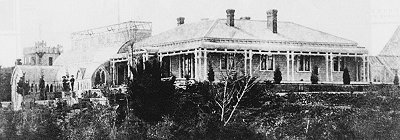


Alexander Bickerton's 1885 house was called Wainoni after the original Māori name for the bend in the Avon River, which it overlooked. The house stood above the since leveled eastern corner of Wainoni Road and Bickerton Street.

Evening Post, April 1914.
Wainoni Park, near Christchurch, known for several years past as an open-air pleasure resort, was offered for sale by auction recently. The property was first submitted as a going concern, but the best bid received was £30,00, at which figure it was passed in. The movables on the property were then disposed of. Chief interest centered in the disposal of the menagerie. All the animals and birds were sold, the principal buyer being Mr. J. J. Boyd, who was acting for the Onehunga Zoo. Prices received for the principal lots were; Malayan bear £3. Japanese bear 1 £5, twenty-two monkeys 10 shillings each, three black wallabies £1 each, two kangaroos £5, rat kangaroo £1, golden pheasant £3, black lemur £2, African monkey £1.


On Pages Rd was the late 1880s home of the Tuam Street merchant and racing horse owner Gilbert Hamilton McHaffie (1861-1905). By the early 1920s the house had become the children's foster home of the Glanville family, until it was purchased in 1947 by Horace Papps who turned the house and five acres of grounds into the Aranui Motor Camp. The house was demolished 1975 and is now the site of McHaffie Place (off Shortland Street).

A 24 image photographic essay of the house in the 1930s and 1940s by a Glanville grandson opens in a new window.
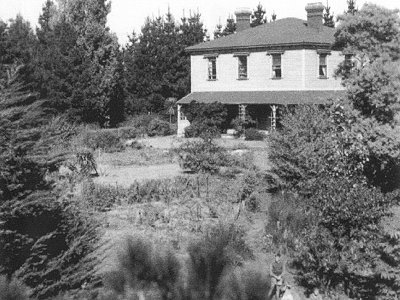


161 Pages Road was built in the early 1890s on 23 acres by Thomas Cheal Norris (1848-1921). It survives on one acre as the He Waka Tapu Maori Health Centre. It was a very fast tram ride into the city from here; by 1911 The Evening Post was reporting that electric trams were pushing 60 Kilometres an hour along Pages Road.
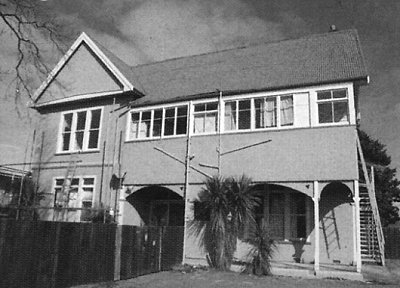


To the design of A H. Hart, this house was built in 1907 by W. C. Evans, at the corner of Pages Road and Shortland Street, for Henry Francis Stevens (1859-1931), an Wholesale Druggist of Worcester Street. Although the house and its former stables survive, it has been converted into six flats, and a row of concrete home units now occupy the Pages Road frontage.


To promote the Christchurch City Libraries Retrospective: Christchurch life, architecture and design 1940s - 1970s photo competition, we're featuring a series of images from each decade. This week we look at the later 1940s.

The Upham House, 1945

To promote the Christchurch City Libraries Retrospective: Christchurch life, architecture and design 1940s - 1970s photo competition, we're featuring a series of images from each decade. This week we look at the later 1940s.


32 Gloucester Street, 1945

(Built before 1878 the house was extensively remodeled by the architect T. G. Lucas in 1938).

The son of a civil servant, John Hazlitt Upham was born in London in 1867 and educated in England and France. After working on a Queensland sugar plantation he visited his older brother, the much-loved Winchester Street, Lyttelton doctor, Charles Hazlitt Upham (1863-1950). John stayed on in Canterbury, graduating in Law from Canterbury University College in 1902. He married Agatha Mary Coates, grand daughter of William Guise Brittan, two years later.

Upham eventually became a partner in the legal practice of Harper, Pascoe, Buchanan and Upham, which in 2008 is known as Anthony Harper and Company. He retired in 1949 and after a short illness, died on the 12th of June 1951. Seventeen years his junior John Upham's wife lived on until 1975, dying at the age of 91.

Named after his uncle, their only son Charles Hazlitt Upham was born on the 21st of September, 1908 in this extant family home on the southern side of Gloucester Street, between Montreal Street and Rolleston Avenue. Charles and his three sisters were reared in the English manner with a number of domestic servants.

Young Charles was sent to the Waihi School at Winchester before becoming a day pupil at Christ's College in 1923. Five years later he enrolled at the Lincoln Agricultural College, thereafter becoming a high country shepherd. By 1939 he was employed in the Vauation Department of the Christchurch City Council, before joining the Army at the outbreak of the Second World War. Without doubt his subsequent military career indicates that he was one of the most courageous leaders of any modern conflict.

Returning to the family home in 1945 Captain Charles Upham, V.C. and Bar wed his fiancée in June of that year. The couple had three children. The modest hero then resumed his farming career at Conway Flat, Hundalee, an isolated area of North Canterbury, where he died at the age of 86 in November 1994.

Sep 17, 2008

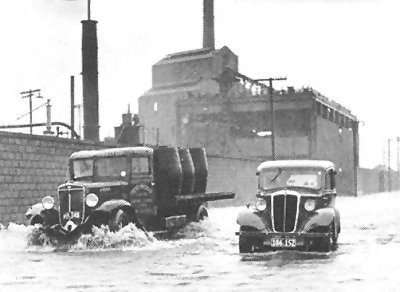
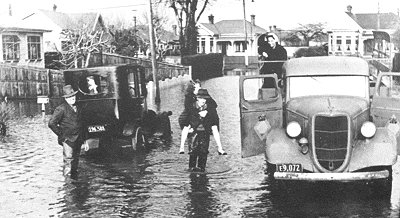
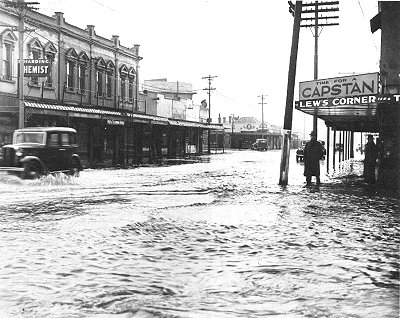
1940s Christchurch Floods

To promote the Christchurch City Libraries Retrospective: Christchurch life, architecture and design 1940s - 1970s photo competition to find key images of the city's post-war period, we're featuring a series of images from each decade. This week we'll reflect upon the 1940s.

The period of the Second World War and the years immediately following it were an era of a significant shortage of both local manpower and imported machinery, (there was also a shortage of photographic film - the 1940s only account for 1.4% of the images in our archive). One of the consequences of that situation was a neglect of the city's drainage sytem.

1945 was the worst year of that decade for drainage failure; between May and August there was severe flooding throughout city.


An easterly view of Carlyle Street, Sydenham
the Christchurch Gas Company's Coke furnace in the background.


Northery view towards Warrington Street, of Chancellor Street, Shirley
8 August 1945.


North-westerly view of the Beckenham shopping centre
from the  corner of Colombo and Tennyson Streets
19 May 1945

Sep 16, 2008

Christchurch 1945

To promote the Christchurch City Libraries Retrospective: Christchurch life, architecture and design 1940s - 1970s photo competition we're going to feature a series of photographs from each decade. This week we'll reflect upon the later 1940s.

1945 was a memorable year for Christchurch; the Second World War ended amid crowds processing up Colombo Street to the Square in celebration, the 1912 tower of the Sydenham Post office was demolished, there were floods in many parts of the city, the Majestic Theatre in Manchester Street burnt, the lowest air temperature of minus 7.1 degrees Centigrade was recorded and the Railway line to Picton was completed.

With the start of the 40 hour week, the city shops were closed on Saturdays until 1981, Hubert de Rie Flesher sold Avebury House along with 8 acres of grounds in Richmond to the Christchurch City Council and the Cora Wilding Youth Hostel was thereby established. Charles Upham was awarded his second Victoria Cross and his maternal Uncle, the last survivor of the 1850 first four ships emigrants, died.

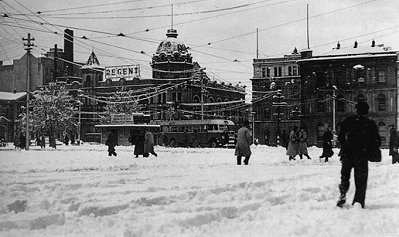
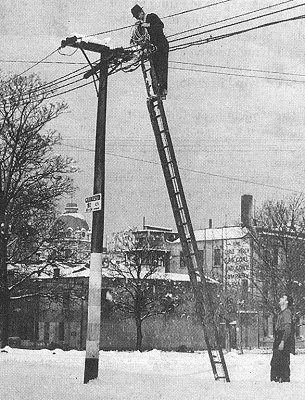
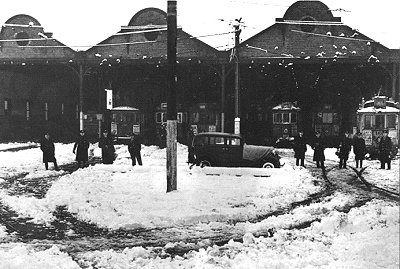
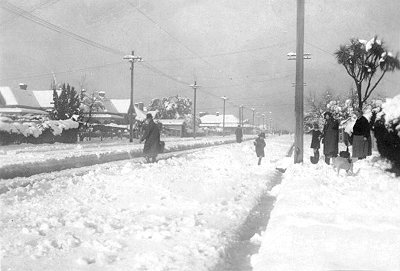
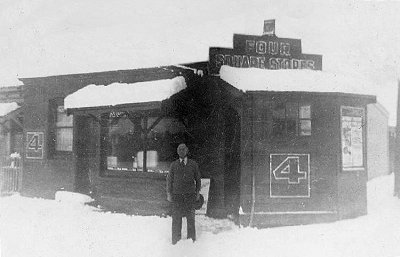
But what was probably the most photographed event occured on July the 14th when 45 Centimetres of snow fell on the city. There was extensive damage to Riccarton Bush, power and telephone lines came down and public transport ground to a halt. Here then are some photographs of that memorable event.


A south-westerly view across Cathedral Square to the Regent Theatre.


A south-easterly view from the north-west corner of Durham and Gloucester Streets.


A southerly view of the Trams sheds on Moorhouse Avenue near Falsgrave Street.


A southerly view along Barbadoes Street North towards the Edgeware Road intersection.


The Four Square shop on the corner of Station Road and Flavell Street, Heathcote.