Sep 18, 2008

1940s Wainoni

Generally regarded as little better than a desert, the area originally known as the Sand Hills district, between Christchurch and New Brighton, was flat land humped up into a series of low, shifting sand hills, barren except for a few hardy native plants.

In 1875 the Architect and Christchurch City Surveyor Cornelius Cuff (1837-1901) purchased all of the area that would become known as Wainoni. Cuff built a substantial two-storey house, with a large conservatory attached to its eastern side. Named Sandilands it was sold to Henry Slater a Lawyer of Lichfield Street. Last occupied by the widowed Ellen Susanna Slater in the 1950s, it became derelict and was demolished about 1963 to make way for Vancouver Crescent.

From the early 1880s Cuff subdivided much of his land into rural-recreational blocks of 20 to 30 acres. All of the six grand houses built between 1882 and 1907 survived into the 1950s, but only two have made it to the 21st century.

With the advent of sewerage connections from the later 1940s Wainoni quickly developed as a suburb of predominantly three-bedroom weather board houses on quarter acre sections.
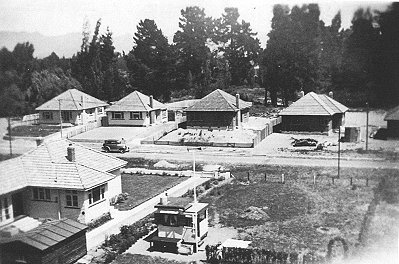

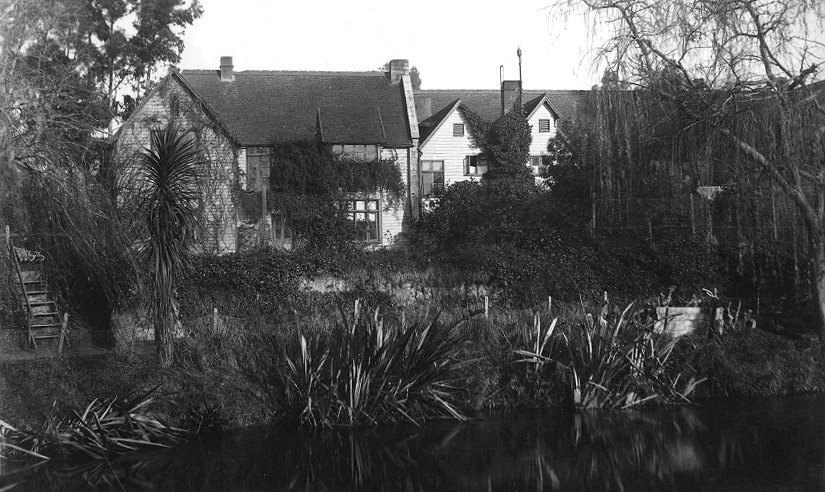
An elevated westerly view of Ottawa Road in 1946, with the extensive grounds of Cornelieus Cluff's 1870s house in the background. Originally a sandy track to Bickerton's Fireworks factory, it became known as Onslow Street in the late 1880s (after a Governor General), the name was changed to Ottawa Road in 1933 to mark the visit of a Canadian Prime Minister.
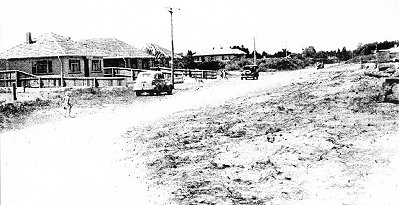

A 1948 south-easterly view towards Pages Road of Shortland Road (now Street) from the corner of Wainoni Road. Shortland Street was probably named after Dr Edward Shortland (1812–93), Physician, early South Island explorer, Māori scholar and linguist.


The Grand Houses of Wainoni
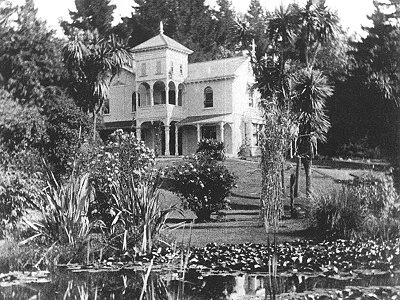

Littleover House was built in 1882. It was demolished in 1963 to be replaced by a Milk Transfer Station in what became Tahuna Street.
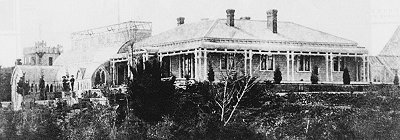


Alexander Bickerton's 1885 house was called Wainoni after the original Māori name for the bend in the Avon River, which it overlooked. The house stood above the since leveled eastern corner of Wainoni Road and Bickerton Street.

Evening Post, April 1914.
Wainoni Park, near Christchurch, known for several years past as an open-air pleasure resort, was offered for sale by auction recently. The property was first submitted as a going concern, but the best bid received was £30,00, at which figure it was passed in. The movables on the property were then disposed of. Chief interest centered in the disposal of the menagerie. All the animals and birds were sold, the principal buyer being Mr. J. J. Boyd, who was acting for the Onehunga Zoo. Prices received for the principal lots were; Malayan bear £3. Japanese bear 1 £5, twenty-two monkeys 10 shillings each, three black wallabies £1 each, two kangaroos £5, rat kangaroo £1, golden pheasant £3, black lemur £2, African monkey £1.


On Pages Rd was the late 1880s home of the Tuam Street merchant and racing horse owner Gilbert Hamilton McHaffie (1861-1905). By the early 1920s the house had become the children's foster home of the Glanville family, until it was purchased in 1947 by Horace Papps who turned the house and five acres of grounds into the Aranui Motor Camp. The house was demolished 1975 and is now the site of McHaffie Place (off Shortland Street).

A 24 image photographic essay of the house in the 1930s and 1940s by a Glanville grandson opens in a new window.
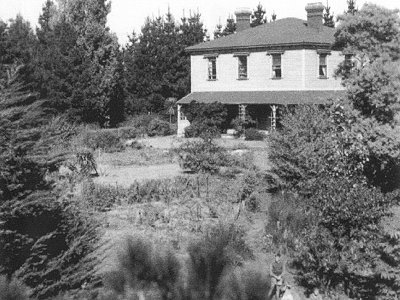


161 Pages Road was built in the early 1890s on 23 acres by Thomas Cheal Norris (1848-1921). It survives on one acre as the He Waka Tapu Maori Health Centre. It was a very fast tram ride into the city from here; by 1911 The Evening Post was reporting that electric trams were pushing 60 Kilometres an hour along Pages Road.
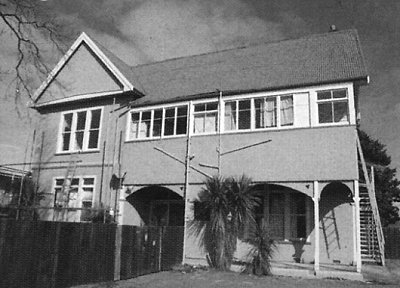


To the design of A H. Hart, this house was built in 1907 by W. C. Evans, at the corner of Pages Road and Shortland Street, for Henry Francis Stevens (1859-1931), an Wholesale Druggist of Worcester Street. Although the house and its former stables survive, it has been converted into six flats, and a row of concrete home units now occupy the Pages Road frontage.


To promote the Christchurch City Libraries Retrospective: Christchurch life, architecture and design 1940s - 1970s photo competition, we're featuring a series of images from each decade. This week we look at the later 1940s.

The Upham House, 1945

To promote the Christchurch City Libraries Retrospective: Christchurch life, architecture and design 1940s - 1970s photo competition, we're featuring a series of images from each decade. This week we look at the later 1940s.


32 Gloucester Street, 1945

(Built before 1878 the house was extensively remodeled by the architect T. G. Lucas in 1938).

The son of a civil servant, John Hazlitt Upham was born in London in 1867 and educated in England and France. After working on a Queensland sugar plantation he visited his older brother, the much-loved Winchester Street, Lyttelton doctor, Charles Hazlitt Upham (1863-1950). John stayed on in Canterbury, graduating in Law from Canterbury University College in 1902. He married Agatha Mary Coates, grand daughter of William Guise Brittan, two years later.

Upham eventually became a partner in the legal practice of Harper, Pascoe, Buchanan and Upham, which in 2008 is known as Anthony Harper and Company. He retired in 1949 and after a short illness, died on the 12th of June 1951. Seventeen years his junior John Upham's wife lived on until 1975, dying at the age of 91.

Named after his uncle, their only son Charles Hazlitt Upham was born on the 21st of September, 1908 in this extant family home on the southern side of Gloucester Street, between Montreal Street and Rolleston Avenue. Charles and his three sisters were reared in the English manner with a number of domestic servants.

Young Charles was sent to the Waihi School at Winchester before becoming a day pupil at Christ's College in 1923. Five years later he enrolled at the Lincoln Agricultural College, thereafter becoming a high country shepherd. By 1939 he was employed in the Vauation Department of the Christchurch City Council, before joining the Army at the outbreak of the Second World War. Without doubt his subsequent military career indicates that he was one of the most courageous leaders of any modern conflict.

Returning to the family home in 1945 Captain Charles Upham, V.C. and Bar wed his fiancée in June of that year. The couple had three children. The modest hero then resumed his farming career at Conway Flat, Hundalee, an isolated area of North Canterbury, where he died at the age of 86 in November 1994.

Sep 17, 2008

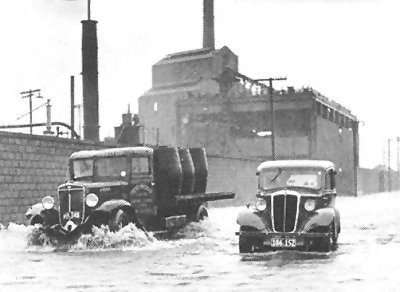
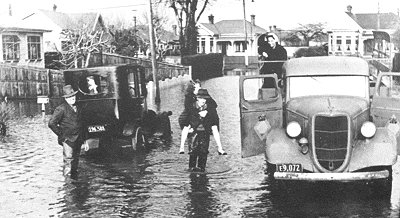
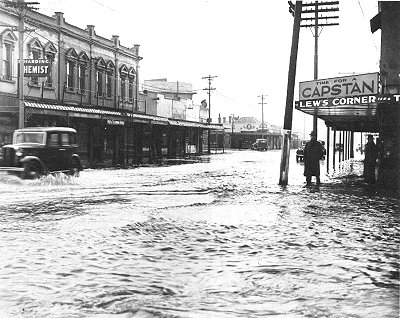
1940s Christchurch Floods

To promote the Christchurch City Libraries Retrospective: Christchurch life, architecture and design 1940s - 1970s photo competition to find key images of the city's post-war period, we're featuring a series of images from each decade. This week we'll reflect upon the 1940s.

The period of the Second World War and the years immediately following it were an era of a significant shortage of both local manpower and imported machinery, (there was also a shortage of photographic film - the 1940s only account for 1.4% of the images in our archive). One of the consequences of that situation was a neglect of the city's drainage sytem.

1945 was the worst year of that decade for drainage failure; between May and August there was severe flooding throughout city.


An easterly view of Carlyle Street, Sydenham
the Christchurch Gas Company's Coke furnace in the background.


Northery view towards Warrington Street, of Chancellor Street, Shirley
8 August 1945.


North-westerly view of the Beckenham shopping centre
from the  corner of Colombo and Tennyson Streets
19 May 1945

Podcast: The Suspect Society

Relevant to the current sociological trends in New Zealand is the first of a three part series from the Canadian Broadcasting Corporation.

The Surveillance Society. The New Authoritarianism. The Age of Paranoid Politics. These terms, and many others, have been used to describe how the political ground has been shifting under us, particularly since 9/11. Terrorism and national security have become obsessive anxieties. Fear and suspicion have become the order of the day. We are living in what The Best of Ideas producer Mary O’Connell calls “the suspect society.”

Right click to Download The Suspect Society - Part One
[mp3 file: runs 52:07]

Please note: podcasts are archived for 4 weeks only.

Sep 16, 2008

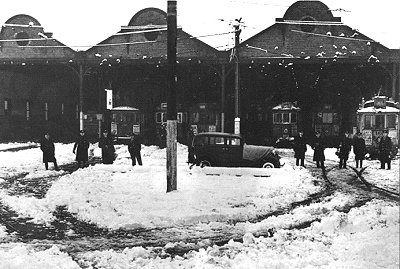
Christchurch 1945

To promote the Christchurch City Libraries Retrospective: Christchurch life, architecture and design 1940s - 1970s photo competition we're going to feature a series of photographs from each decade. This week we'll reflect upon the later 1940s.

1945 was a memorable year for Christchurch; the Second World War ended amid crowds processing up Colombo Street to the Square in celebration, the 1912 tower of the Sydenham Post office was demolished, there were floods in many parts of the city, the Majestic Theatre in Manchester Street burnt, the lowest air temperature of minus 7.1 degrees Centigrade was recorded and the Railway line to Picton was completed.

With the start of the 40 hour week, the city shops were closed on Saturdays until 1981, Hubert de Rie Flesher sold Avebury House along with 8 acres of grounds in Richmond to the Christchurch City Council and the Cora Wilding Youth Hostel was thereby established. Charles Upham was awarded his second Victoria Cross and his maternal Uncle, the last survivor of the 1850 first four ships emigrants, died.

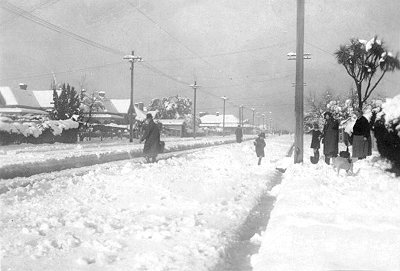
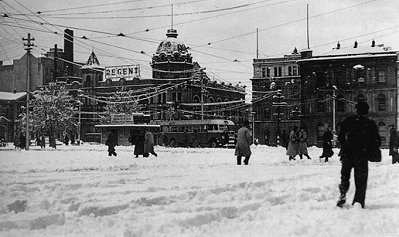
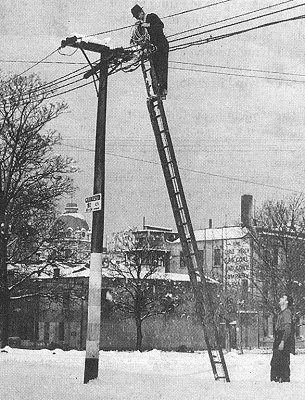
But what was probably the most photographed event occured on July the 14th when 45 Centimetres of snow fell on the city. There was extensive damage to Riccarton Bush, power and telephone lines came down and public transport ground to a halt. Here then are some photographs of that memorable event.


A south-westerly view across Cathedral Square to the Regent Theatre.


A south-easterly view from the north-west corner of Durham and Gloucester Streets.


A southerly view of the Trams sheds on Moorhouse Avenue near Falsgrave Street.


A southerly view along Barbadoes Street North towards the Edgeware Road intersection.


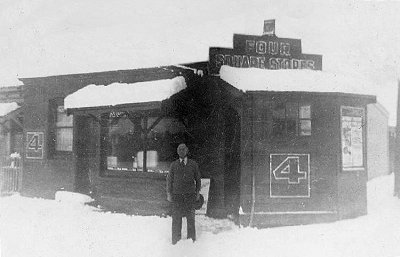
The Four Square shop on the corner of Station Road and Flavell Street, Heathcote.

Christchurch Retrospective Photography Competition


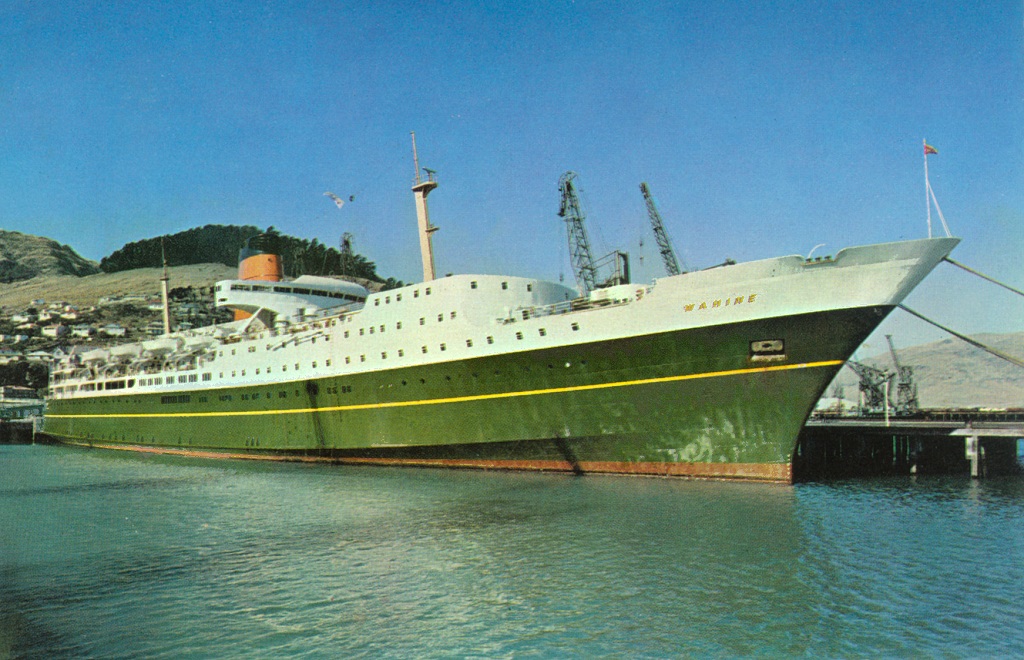
TEV Wahine at Lyttelton, 1967

Christchurch City Libraries is running a competition to try and find some key images of Christchurch's heritage of the post-war period with the theme of "Retrospective: Christchurch life, architecture and design 1940s - 1970s."

The Library invites the people of Christchurch to enter a photo competition designed to uncover Christchurch photos of the 40s, 50s, 60s and 70s.

The overall winner will receive a digital camera, while the winners of each decade will collect a photography voucher.

Photos can be entered under the following themes:

The photos will be displayed in the Central Library and on the library website. The winners of each decade and the overall winner will be announced on Tuesday 28 October after Heritage Week has finished, and presented with some great prizes.

All entries will be considered for inclusion in the Christchurch City Libraries online images collection.

Enter at your local library:

Fill in the form to go with your photograph, and hand in at the desk. Photographs will be sent to Central Library for scanning, and returned to your local library for you to collect.

Enter online:

Email library@ccc.govt.nz with your electronic image and attaching the filled in form (word document). Please include 'Heritage Week photograph competition' in the subject line. Submission of an electronic entry form signifies acceptance of the terms and conditions of the competition.

Competition terms and conditions
  • Multiple entries are permitted. Each image must be accompanied by a separate entry form.
  • Photos will be transferred to the Christchurch City Libraries Flickr Pages for display. Entering the competition gives permission for photos to be added to the flickr service under the licence Creative Commons Attribution-Noncommercial-No Derivative Works 3.0 New Zealand.
  • Copies of the photograph entries may be displayed in the library and on the Christchurch City Libraries website.
  • Entries that do not have full contact details in entry forms will not be considered.
  • All winners will be notified by telephone and/or email.
  • By entering all winners consent to their names and images being used for reasonable publicity purposes by Christchurch City Libraries.
  • The judges’ decision is final and no correspondence will be entered into.
  • Christchurch City Libraries will not be responsible for any breaches of copyright or privacy that may occur.
  • Christchurch City Libraries’ reserve the right not to display all entries.

Sep 15, 2008

Christ's College circa 1881

A westerly view from Hagley Park of Christ's College across the Avon River near to the Armagh Street bridge.

Photographed by the Burton Brothers of Dunedin about 1881, this restored image from the Canterbury Heritage Archive depicts the Headmaster's House to the Left and pupil accommodation to the Right. Both buildings appear in the photographic record from 1869, but had been demolished by 1950.

Purchased with a Lotteries Board grant in 1987, an unidentified copy of this photograph is in the collection of the National Museum of New Zealand.


A 1924 aerial view of the buildings.

Sep 13, 2008

John Robert Godley's London Home


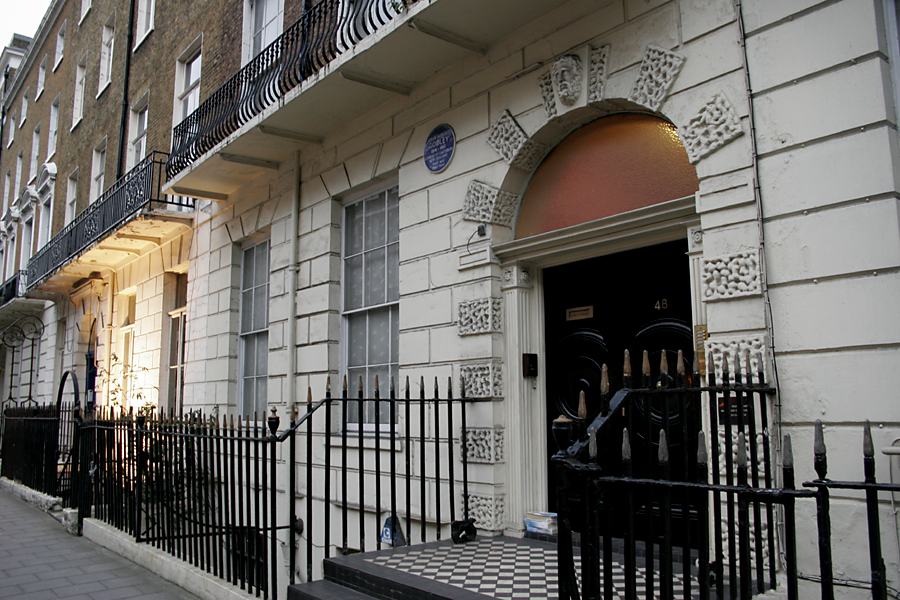
"Old Jack" Godley (1814-1861), a founder and second Lyttelton based Agent of the Canterbury Association, lived and died in this 1810 terraced house at 48 Gloucester Place, in London's Marylebone district (better known as Fitzrovia). Charlotte Godley survived her husband by 45 years and died in the Grade II listed townhouse on the 3rd of January 1907. Subsequently the home of the Rabbi Sir Philip Magnus, Baronet, it is now the St George Hotel.

Photographed by Ramanja

Sep 12, 2008

Fendalton 1899


To the Tudoresque Arts and Crafts design of Joseph Clarkson Maddison (1850-1923), the subsequently much enlarged and photographed Mona Vale House under construction for the Christchurch Accountant Frederick Waymouth (1849-1914).

Melbourne House


Behind the modernised facade of the building occupied in 2008 by Hunters and Collectors on the western side of High Street between Cashel and Lichfield Streets is the 1875 Melbourne House.

Built by the Polish Ironmongers Solomon and Hiram Nashelski to replace their single storey hardware shop of 1864, they shared the ground floor with Hermann Isaac, a watchmaker and Solomon Nashelski's son-in-law (Isaac would later become a local name to be reckoned with).

Christchurch was something of a Wild West frontier town in the late nineteenth century (some might consider that it still is); revolvers could purchased over the Nashelski's counter in the late 1880s and business was good - they had added a fourth storey before 1900. 68 year-old Solomon Nashelski of Armagh Street died on the 5th of May, 1890 and his hardware shop became Ashby, Bergh and Company.

Edward E Ashby and the Norwegian Ludwig Bergh (1848-1895) had both begun work at the original Ironmongery in 1864, and although their names remain incised into the Limestone facade, the 145 year old ghost of the Nashelki brother's humble enterprise lingers on in the twenty-first century as the automotive parts retailer Repco.

One of the sixteen major buildings gutted in the Great Fire of 1908 (centre) Melbourne House was refurbished to its current appearance in the following year.